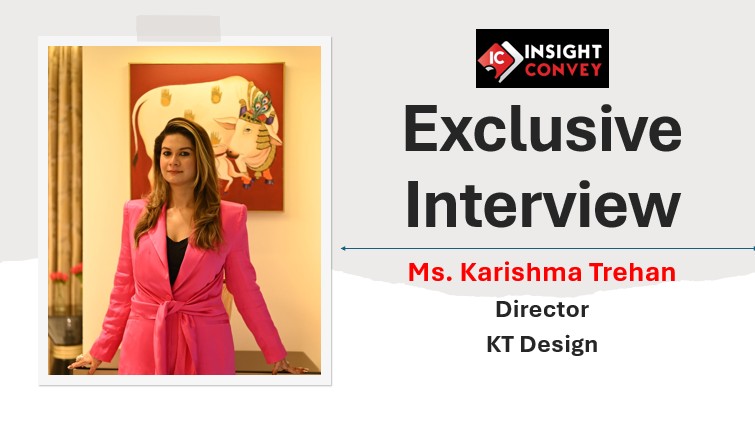
In a world driven by fast-changing trends, Ms. Karishma Trehan stands firmly for design that is soulful, personal, and timeless. As the Director of KT Design, her philosophy—“spaces that tell a story”—emerged from her earliest projects and her belief that every home reflects the emotions, choices, and heritage of the people living in it.
In this insightful conversation, she shares how understanding clients deeply, blending classic influences with modern needs, and maintaining honesty at every stage shapes her design journey. From balancing luxury with comfort to navigating India’s booming interior design landscape, Ms. Trehan reveals why she chooses quality over quantity and how meaningful collaboration, transparency, and “fusion design” define the future of KT Design.
Read more:- Tech4Ed KC GlobEd: Building Bridges Between Academia & Industry
Where did the idea behind your design philosophy “spaces that tell a story” come from?
The idea emerged while designing my own home and while working on my very first client project. Every home naturally tells a story the people living in it reflect their choices, emotions, and personality through the space. When I understand a client’s temperament, sentiments, and preferences, the story of the home automatically reveals itself.
This became my approach a home should match the person’s nature and emotions. That’s what “spaces that tell a story “Truly means.
In an era of fast-changing trends, why did you choose “soulful, timeless interiors”?
Because this style speaks to my soul and aligns with my personal taste. I’ve always been drawn to classic design ever since childhood. Even when I traveled abroad, historical architecture fascinated me more than anything modern. Classic design carries depth, stories, and heritage. Whether it’s palaces, old Indian homes from the 90s, or vintage buildings these spaces have character.
Modern trends come and go, but classics never fade be it in jewellery, interiors, or any design field. That’s why I naturally gravitate towards timelessness.
When you start a new project, how do you understand the client’s personality and lifestyle? Any interesting example?
For me, the key is conversation. I talk to my clients a lot during the initial stage, midway, and even towards the end. Some clients know exactly what they want from day one, but others are confused. Through discussion, I help them articulate their own preferences.
We also create mood boards so clients can visualize ideas. But sometimes, what they see online doesn’t look good in reality for example, a yellow that looks great in a photo may not work on a wall. So, I explain, guide, and sometimes even mediate between family members!
There have been days where I’ve sat with families and said, “No beta, your mom is right, this color won’t work.” I don’t mind doing that because it helps avoid mistakes and leads to a beautiful final result.
Read more:- LEAFOBERRYY launches its Luxe Range this Winter Festive Season
Luxury, aesthetics, and comfort how do you balance these three elements?
It always starts with understanding the person, what their lifestyle is, and what their budget allows. After that, the balance of luxury, aesthetics, and comfort comes naturally.
Many people today want highly automated, technology-driven homes. I’m personally not a big fan of over-reliance on automation. When technology fails Wi-Fi issues, system glitches you’re suddenly stuck. But if a client insists, I explain the pros and cons honestly and then follow their choice.
I always tell clients the truth even the problems they may face in a year or two because transparency avoids future issues.
Why is the demand for interior design growing so fast in India?
India has always had a luxurious, design-rich heritage look at our palaces, old architecture, and royal homes. There was a period when development slowed, but today India is again progressing rapidly.
As lifestyle improves, people naturally want aesthetically beautiful spaces. It’s in our roots, in our DNA. As wealth grows, taste grows and that’s why interior design is booming.
Sustainability, smart homes, and biophilic design which trend excites you the most?
For me, it’s not one trend, it’s a fusion of all three. That’s my personal term “fusion design”. A home should be smart, but not excessively dependent on technology. It should be sustainable, but not at the cost of practicality. It should connect with nature yet still remain functional. The real goal is comfort, and a balanced mix of all three trends helps achieve that.
We even take inputs from every family member through a form to understand each person’s needs and create a comfortable space for everyone. Budget, of course, plays a role in determining how far we can go with technology or custom elements.
Read more:- All-in-One Skin Solutions Kit by Magical Blends
How do you see the future of collaboration between real estate developers and boutique interior studios?
From my experience, demand is rising because people want homes that truly reflect their lifestyle. Developers and boutique designers bring different perspectives, and together they can create personalized, high-quality spaces.
But for me personally, I focus on quality, not quantity. I take only 3–4 projects a year because I want to enjoy my work, build relationships, and deliver design that genuinely satisfies both me and the client. Good collaboration works only when both sides understand taste, expectations, and boundaries.
How do you help clients who have no clear taste or design language?
Conversation again! Many clients are uncertain because they’ve seen too many ideas online Pinterest, Instagram, YouTube and they often want to copy what they’ve seen without checking if it suits their home.
I patiently talk to them, understand what they are truly trying to say, and guide them with examples. If something they want won’t look good, I will explain why. If families disagree among themselves, I mediate. My role is not just to design the house but to help them discover their own style.
How important is transparency in timelines, materials, and budgets? How do you maintain it?
Extremely important. In fact, I’m very blunt and honest with my clients. I don’t sugarcoat things. From day one, I tell them what’s possible, what’s not, and what issues they may face in the future.
Because even if you do 90% right, people often remember the 10% that went wrong. So I prefer to be upfront. It avoids misunderstandings and protects the designer’s reputation as well.
What is your vision for K T Designs in the next 3–5 years? Any new styles or markets you plan to explore?
My vision is simple quality over quantity. I want to continue taking selective projects where I can enjoy the process and create tasteful, timeless spaces.
Expanding to new styles or markets will happen naturally if the client and I share the right design vibe. I prefer working with clients who understand my aesthetic and trust my instincts. That’s when the best homes are created.
Follow: InsightConvey